
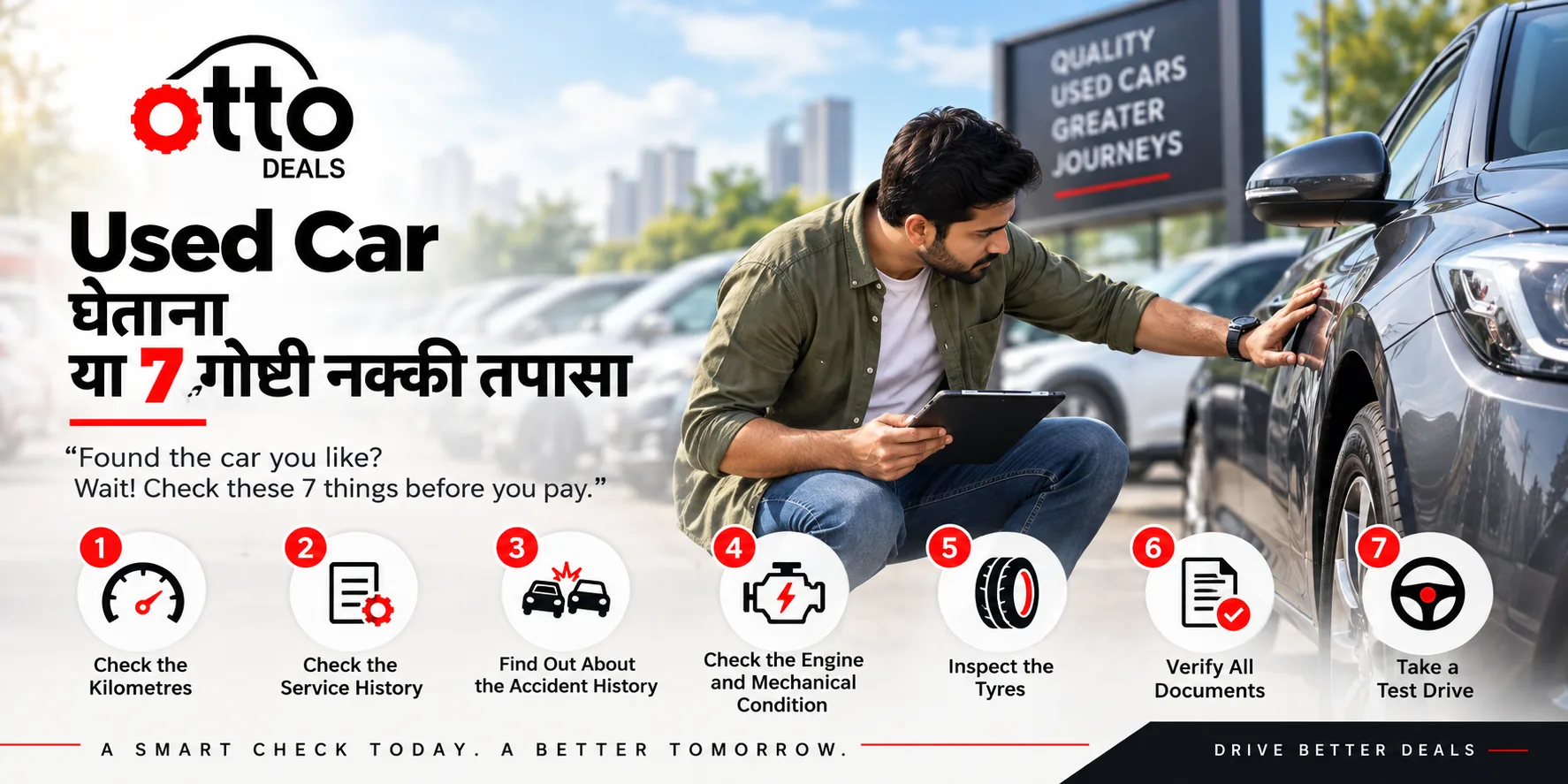
“Found the car you like? Wait! Check these 7 things before you pay.”
Buying a used car is not just about finding the right model at the right price. A car may look great in photos, have a clean exterior, and fit your budget—but its actual condition can only be understood when you look beyond its appearance. This is especially important when buying a used car in Pune, where daily city traffic can put additional wear on components such as the clutch, brakes, tyres and suspension. Before you make your final decision, take a closer look at these 7 important things to check when buying a used car.
1. Check the Kilometres —
But Don't Rely on Them Alone One of the first questions most buyers ask is, “How many kilometres has the car been driven?” While the odometer reading is important, it shouldn't be the only factor you consider. A car with fewer kilometres is not automatically a better car. A vehicle that has been driven more but regularly serviced and maintained may be a better choice than a low-mileage car that has been poorly maintained.
Check:
● Odometer reading
● Kilometres mentioned in service records
● Age of the car
● City vs. highway usage
● Regularity of servicing
Pro Tip: Compare the odometer reading with the available service history. If the numbers don't seem consistent, consider getting the car professionally inspected before making a decision.
2. Check the Service History
A car's service history can tell you a lot about how it has been maintained over the years. If the seller has service records or bills, take some time to go through them. Look for regular servicing as well as any major repairs or component replacements.
Check for:
● Regular service records
● Service bills
● Engine oil and filter maintenance
● Major repairs
● Parts replacement
● Previous maintenance work
Don't rely only on a seller saying that the car is “well maintained.” Wherever possible, verify it through actual service records.
A good-looking car is great. A well-maintained car is better.
3. Find Out About the Accident History
A car can look perfectly clean from the outside and still have a significant repair history. Before buying, ask the seller directly whether the car has been involved in any major accident.
Pay attention to:
● Repainted body panels
● Major body repairs
● Uneven panel gaps
● Differences in paint shades
● Airbag repairs or replacements
● Any major structural repairs
If you notice something unusual or are unsure about the car's condition, getting it checked by a qualified mechanic or professional inspection service can be a sensible step.
Remember: Not every scratch means the car has been in an accident, and not every repaired car is necessarily a bad purchase. What matters is understanding what happened, how serious the damage was, and how properly it was repaired.
4. Check the Engine and Mechanical Condition
This is one area where you shouldn't rely on photographs or the seller's description alone. During the inspection and test drive, pay attention to the overall mechanical condition of the car.
Look for:
● Unusual engine noises
● Excessive smoke
● Oil or fluid leaks
● Dashboard warning lights
● Smooth acceleration
● Gear-shifting issues
● Braking noise or vibration
● Steering response
● Suspension noises
If you don't have enough knowledge about cars, don't try to diagnose everything yourself. A qualified mechanic can help identify issues that may not be obvious during a quick inspection.
5. Don't Forget to Check the Tyres
Tyres are easy to overlook when you're excited about buying a car, but they can have a direct impact on both safety and your future maintenance expenses.
Check:
● Tyre tread
● Uneven wear
● Cracks or visible damage
● Condition of all four tyres
● Spare tyre
● Approximate tyre age
If the tyres are wearing unevenly, it may be worth checking the wheel alignment, suspension or other related components as well. A car that seems like a great deal can become more expensive if several tyres need to be replaced soon after purchase.
6. Verify the Documents Before Finalising the Deal
You may like the car. You may even agree on the price. But don't rush into the final payment without verifying the relevant documents. Depending on the vehicle and transaction,
check:
● Registration Certificate (RC)
● Valid insurance
● PUC certificate
● Service records
● Ownership details
● Loan/NOC-related documents, where applicable
● Pending challans or applicable dues
Make sure the vehicle details mentioned in the documents match the actual car. Also understand the applicable RTO and ownership-transfer requirements before completing the transaction.
A simple rule: Never let a good price make you skip proper verification.
7. Always Take a Test Drive
A listing can tell you about the car's model, year, kilometres and features. Photos can show you how it looks. But only a test drive can give you a real feel for how the car drives.
During the test drive, pay attention to:
● Engine response
● Clutch feel
● Gear shifting
● Braking
● Steering response
● Suspension
● AC performance
● Unusual sounds
● Dashboard warning lights If you're planning to use the car primarily in Pune, try to experience it in city traffic and different road conditions where possible.
Photos show you the car. A test drive tells you how it feels.
Don't Make Your Decision Based on Just One Car
One of the most common mistakes buyers make is falling in love with the first car that looks right. Instead of immediately finalising one option, explore a few similar cars within your budget.
Compare them based on:
Price + Year + Kilometres + Condition + Service History + Features + Documents
A slightly more expensive car that has been properly maintained may sometimes make more sense than a cheaper car that requires significant repairs.
The goal isn't simply to find the cheapest used car. It's to find the right car at the right value.
How Ottodeals Can Help You Search for a Used Car Finding the right used car becomes easier when you have more options to consider.
Ottodeals is an online used-car marketplace where buyers can explore available car listings and review the information provided for each vehicle.
Depending on the listing, buyers can consider details such as:
● Price
● Model
● Year
● Kilometres
● Fuel type
● Transmission
● Vehicle specifications
Instead of making a decision based on a single option, you can explore different listings and compare them based on your budget, requirements and preferred vehicle details. This gives you a better starting point for making an informed buying decision. Your next car deserves a smarter search.
🚗 Explore used-car listings on Ottodeals and start your search with more options and better information.
👉 Explore Cars on Ottodeals
Frequently Asked Questions
1. What should I check before buying a used car?
Start with the car's kilometres, service history, accident history, engine and mechanical condition, tyres, documents and test drive.
2. Is a low-mileage used car always better?
Not necessarily. Mileage is only one factor. The car's age, maintenance history, usage pattern and overall condition should also be considered.
3. Why is service history important when buying a used car?
Service history can give you an idea of how regularly the vehicle was maintained and whether it has undergone major repairs or component replacements.
4. Should I get a used car inspected by a mechanic?
If you are not confident about evaluating a car's mechanical condition, getting it inspected by a qualified mechanic or professional inspection service can help you identify potential issues.
5. What documents should I check before buying a used car?
Depending on the vehicle and transaction, check the RC, valid insurance, PUC, service records and relevant ownership or loan-related documents.
6. Why should I compare multiple used cars before buying?
Comparing multiple cars allows you to look beyond the asking price and consider factors such as year, kilometres, condition, service history and features before making your decision.
7. What should I be careful about when searching for a used car online?
Read the listing details carefully, ask the seller relevant questions, verify the vehicle and documents, and whenever possible, inspect and test-drive the car before finalising the purchase.
Final Thoughts
Buying a used car shouldn't be a decision based only on how good the car looks or how attractive the price seems.
Check the kilometres. Go through the service history. Ask about accidents. Inspect the mechanical condition. Check the tyres and documents. And most importantly, take a proper test drive.
Most importantly, don't limit yourself to one option. Compare available cars before making your final decision.
Because smart used-car buying isn't about finding the lowest price.