When buying a car, one of the first decisions you need to make is whether to buy a brand-new car or choose a pre-owned one.
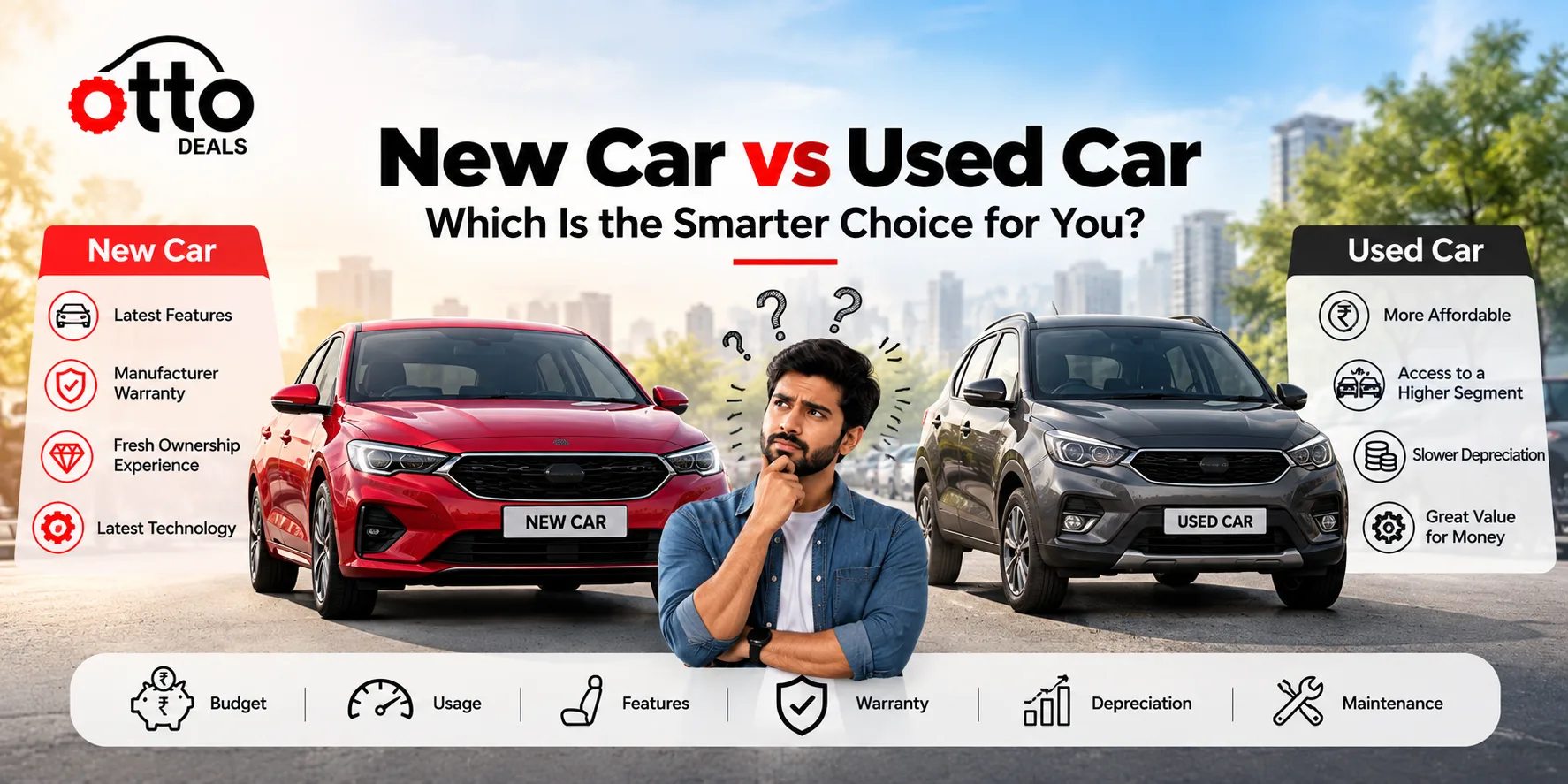
A new car gives you the latest features, a fresh ownership experience and manufacturer warranty. A used car, on the other hand, can give you access to a higher segment or better-equipped vehicle at a lower purchase price.
But there is no universal answer to which one is better.
The right choice depends on how you plan to use the car, how much you want to spend, what features matter to you, how long you intend to keep the vehicle and how comfortable you are with maintenance and ownership considerations.
Let's break down the key factors.
1. Start With Your Actual Budget
Budget is important, but don't look only at the ex-showroom or purchase price.
When buying a car, consider the overall ownership cost, including:
- Initial purchase price
- Insurance
- Registration-related costs
- Fuel expenses
- Regular servicing
- Repairs and replacement parts
- Financing costs
- Future resale value
A new car may require a higher initial investment, while a used car can allow you to enter a particular segment at a lower purchase price.
For example, if your budget for a used car is similar to what you would spend on an entry-level new car, you may be able to explore older or pre-owned vehicles from a higher segment.
The important question is not simply “How much can I spend?”
Ask:
“What kind of car gives me the value I need within my overall budget?”
2. Think About How You Will Use the Car
Your daily usage should play a major role in the decision.
If you primarily drive within the city for office commutes, shopping and regular errands, you may not need every feature or the largest vehicle available.
A compact hatchback can be practical for city driving, especially when parking and traffic are regular concerns.
If you frequently travel with family or take long-distance trips, you may place greater importance on:
- Cabin space
- Comfort
- Boot capacity
- Highway performance
- Safety features
- Seating capacity
In such cases, a sedan, SUV or larger vehicle may make more sense depending on your requirements.
So before deciding between new and used, first understand what your daily driving actually demands.
3. Features: Do You Need the Latest?
New cars generally give buyers access to the latest available features, technology and design updates.
Depending on the model and variant, these can include newer infotainment systems, connectivity features, updated safety equipment, improved interiors and newer engine or transmission technologies.
But ask yourself:
Do you need the latest features, or are you looking for the right combination of features and value?
A pre-owned car that is a few years old may still offer features that meet your requirements.
For some buyers, having the latest model matters. For others, getting a well-maintained car with the features they actually use may be more important.
4. Warranty and Peace of Mind
One major advantage of buying a new car is the manufacturer's warranty that typically comes with a new vehicle, subject to the manufacturer's terms and conditions.
This can provide additional peace of mind during the initial ownership period.
With a used car, warranty coverage depends on the vehicle, its age, the manufacturer, any remaining original warranty and the seller or platform involved.
That is why used-car buyers should pay attention to:
- Service history
- Vehicle age
- Previous usage
- Accident history
- Maintenance records
- Insurance records where available
- Vehicle documents
- Current mechanical condition
A lower purchase price should not mean skipping basic checks.
5. Depreciation Matters
Depreciation is one of the biggest financial differences between buying a new and used car.
A new vehicle generally experiences its most significant depreciation during the earlier years of ownership.
This means a buyer who purchases a pre-owned vehicle may avoid some of the initial depreciation that has already occurred.
However, depreciation varies considerably depending on factors such as:
- Brand
- Model
- Age
- Condition
- Mileage
- Demand
- Variant
- Market conditions
Therefore, don't assume that every used car automatically offers better value.
Instead, compare the price, age, kilometers, condition, history and market value before making a decision.
6. Maintenance: New vs Used
Maintenance is another important consideration.
A new car is generally less likely to require age-related repairs during its early years, although regular servicing is still necessary.
With a used car, maintenance requirements can depend heavily on how the vehicle was driven and maintained by its previous owner.
A well-maintained used car with a proper service history may be a practical option, while a poorly maintained vehicle can result in unexpected expenses.
Before buying a used car, consider checking:
- Engine condition
- Transmission
- Brakes
- Tires
- Suspension
- Battery
- Service history
- Warning lights
- Air conditioning
- Electrical systems
A professional inspection can also be useful before completing the purchase.
7. New Car or Used Car — What Matters Most to You?
There is no single right answer for every buyer. Your decision should depend on what matters most to you.
If You Prefer a New Car
A new car may be suitable if you:
- Want the latest model and features
- Prefer a fresh ownership experience
- Want manufacturer warranty coverage
- Don't want to worry about previous ownership history
- Are comfortable with a higher initial purchase price
If You Prefer a Used Car
A used car may be worth considering if you:
- Want to keep your initial purchase cost lower
- Want to explore more cars within your budget
- Are open to older model years
- Want to avoid some of the initial depreciation
- Are willing to check the car's condition and service history carefully
The Smart Choice Depends on Your Priorities
If latest features, warranty and a brand-new ownership experience are your priorities, a new car may suit your requirements.
If value, budget flexibility and more vehicle options are your priorities, exploring the used-car market may make sense.
The important thing is to compare your budget, usage, features, maintenance expectations and long-term ownership plans before making your decision.
Because smart car buying isn't always about choosing new or used — it's about choosing what fits your needs.
8. What If You Are Considering a Used Car?
If a used car fits your needs and budget, don't limit yourself to just one vehicle.
Explore different models, body types, years, kilometres and price points.
This is where an online used-car marketplace such as Ottodeals can help you begin your search.
You can explore available used-car listings and compare different possibilities based on your budget and requirements instead of making a decision after seeing only one option.
You should still independently verify the vehicle's condition, documents, history and other important details before purchasing.
9. Don't Choose the Car Before Choosing Your Requirements
One common mistake is starting the search with a specific model and then trying to make your requirements fit that car.
Instead, begin with questions such as:
- How many people will regularly travel in the car?
- How much do I drive every month?
- Mostly city or highway?
- How much boot space do I need?
- Which features are actually important to me?
- How much can I comfortably spend on ownership?
Once you have these answers, it becomes easier to narrow down the right type of car.
Final Thought: Smart Buying Is About the Right Value
Buying a new car can make sense when you priorities a new vehicle, current features, warranty coverage and a fresh ownership experience.
A used car can make sense when your priorities include a lower purchase price, more choices within your budget or getting access to a different segment of vehicles.
Ultimately, smart buying isn't always about buying new. It's about finding the right value for your needs.
If you're considering a used car, explore different options before making your decision.
Explore available used-car listings on Ottodeals and start finding options that match your budget and requirements.
Your Car. Your Deal. Your Choice.